Note: If you are a legacy user of chemistry24 members, please request a new login access to the premium server with your full name and old login email via vip@rapidlearningcenter.com
Want to become a top gun in your class? How about study less yet score high? Sign up this Physics Survival Weekly to learn how. Designed specifically for students who are taking physics, this free newsletter will show you how to survive and excel in class! Weekly topics include:
How to Study Physics Effectively
How to Read Physics Textbooks Easily
How to Solve Physics Problems Systematically
How to Score High on Physics Exams Strategically
How to Master Physics Rapidly
Each week, you will receive study tips on the topics above and visual tutorial or study template to enhance your physics learning. Enter your name and email below to subscribe free:
Conductor:
Material where electrons are loosely bound and are able to flow throughout due to the free electrons.
Insulator:
Materials where electrons are bound and don’t flow easily.
Semiconductor:
Materials in between insulator and conductor.
Superconductor:
A material where electrons flow without any resistance. Generally, superconductivity only occurs at very low temperatures.
Resistivity:
An intrinsic property of a material that partially determines the resistance of a wire.
Capacitor:
A device used to store or accumulate electric energy. This is done by oppositely charging two nearby conductive surfaces that are not in contact with each other.
Dielectric:
An insulating material is inserted between the plates of a capacitor.
Dielectric Constant:
The factor that describes the additional capacitance gained by adding a dielectric material between the plates of a capacitor.

Rapid Study Kit for "Title":
Flash Movie
Flash Game
Flash Card
Core Concept Tutorial
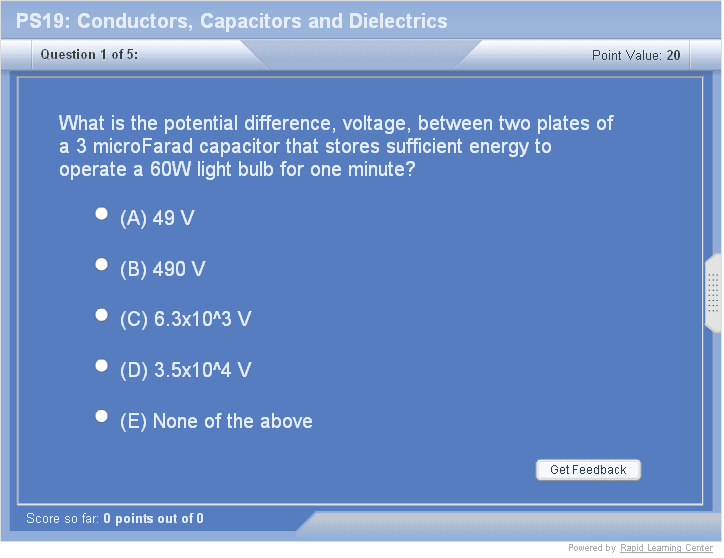
Problem Solving Drill
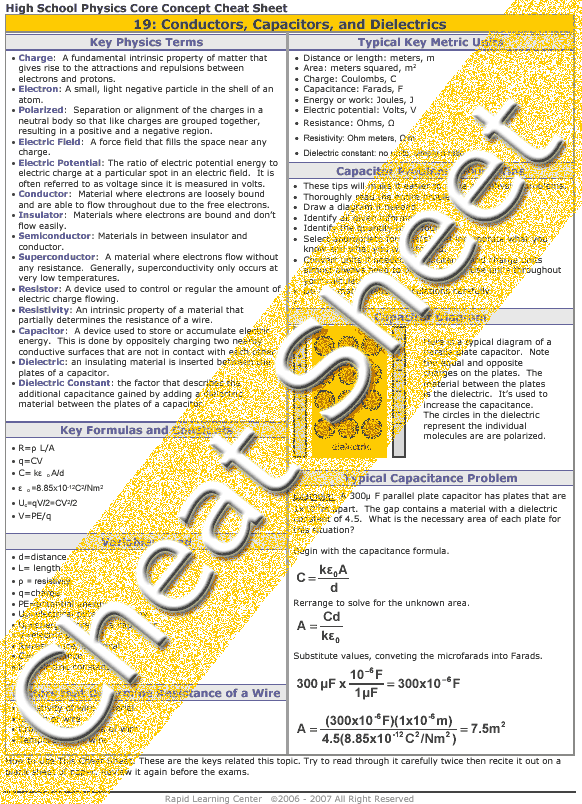
Review Cheat Sheet
"Title" Tutorial Summary :
Materials may conductor charge flow, resist charge flow, or some variation between those two. The resistance of a piece of wire depends upon several factors: the type of material, the length of wire, the cross section of wire, and the temperature of the wire.
Capacitors are oppositely charged sections of conductors held near each other. Although they have a net charge, they store energy due to the proximity of the oppositely charged plates. The strength or capacitance of a capacitor depends on the area of the plates, the distance between them, and a constant. This capacitance could also be increased by adding an insulating material between the plates. This is called a dielectric.
Tutorial Features:
Specific Tutorial Features:
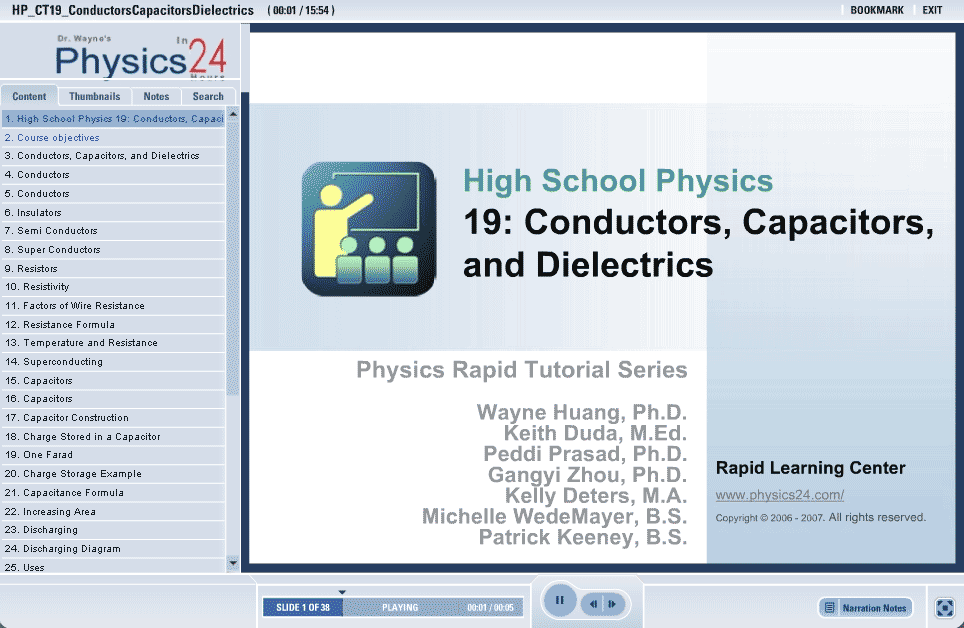
Animated diagram of a capacitor charging and discharging.
Problem-solving techniques are used to work out and illustrate the example problems, step by step.
Series Features:
Concept map showing inter-connections of new concepts in this tutorial and those previously introduced.
Definition slides introduce terms as they are needed.
Visual representation of concepts
Animated examples—worked out step by step
A concise summary is given at the conclusion of the tutorial.